Friday, 15 October 2010

An American Werewolf In London


An American Werewolf In London

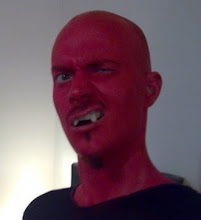
29 years on and American Werewolf In London (AWIL) is justifiably recognised as a horror classic. One of its most memorable features were the gruesome transformation sequences created by special effects whizz Rick Baker, but it has a lot more going for it.
The horror/comedy movie was hardly unknown in 1981 what with a couple of decades of camp Hammer features preceding it, not to mention the Abbot and Costello films, but AWIL was one of the first to try and do both sides justice. The comedy was covered in everything from the OTT “You ain’t from round ‘ere” stereotypes in the Slaughtered Lamb to David running through London Zoo with only balloons for modesty, the kvetching between David and Jack and an actual incarnation of director John Landis’ recurring in-joke See You Next Wednesday, here in the form of a dodgy softcore porn film. Alongside this is genuine horror in the tension-wracked scenes of the boys stalked on the moor, in the suit hunted down in an empty tube station and in the sheer violence of David’s nazi-werewolf dreams.
The film succeeds admirably in creating sympathy for David, a nice guy caught up in an unbelievable situation, without skimping on the gruesome reality of what he has become as his victims confront him later in the film.
Speaking of showing the horror, the aforementioned transformation sequences once again highlight the benefit of ‘live’ camera effects over CGI. Whilst you know that what’s happening is a trick, your mind knows tat the effects at least are as real as the actors in the scene and this helps give the sequences real weight, along with David Naughton’s performance as he screams in absolute agony while his body stretches and contorts in unnatural ways.
In the wide canon of werewolf films throughout the decades AWIL still manages to outshine newer entries such as wolf, Dog Soldiers, The Wolf Man and its own dire sequel, An American Werewolf In Paris, with only the Ginger Snap films worthy rivals.

Thursday, 14 October 2010

Kick Ass


Kick Ass

Superhero parody has been around as long as the current run of comic-book movies have, with 1999’s Mystery Men’s focus on the slightly less super variety of hero pre-dating both X-Men and Spiderman. Since then he genre has been subverted further by the like of Hancock and My Super Ex-Girlfriend.
While Kick Ass isn’t strictly a parody, it offers a skewed view on the genre - what if costumed crime-fighters were real? The titular Kick Ass’s first encounter with criminals provides a pretty definitive answer.
Despite the heaped critical acclaim, the film is not without its problems. Lead character Dave Lizewski is presented as just another teen schlub, but despite his glasses and mop of curls he is obviously tall, muscular and handsome. In his opening scene as he walks the corridors of high school his smiles are too open and charismatic to convince as an everygeek, Aaron Johnson doesn’t seem able to pull off the dorky wimp that Toby Maguire could. Kick Ass firmly sets itself in the modern age with camera phones and social websites key to the movie, leaving it in danger of dating quickly despite a number of the underlying themes being fairly universal. The film is certainly more bloodthirsty than the average caped crusader adaptation, death and dismemberment ramping up considerably when Big Daddy and Hit Girl arrive on the scene.
As Big Daddy, Nicolas Cage finds himself in a film that isn’t a disaster, though this may be to do with him taking a supporting role rather than opening the film, but could be a possible new direction to reverse a career nose dive?
Kick Ass is filled with numerous neat touches: The ‘origin’ story of Big Daddy and Hit Girl, tying them into the plot, Big Daddy’s prowess as a comic book artist, strange sequences relayed by fractured digital video footage, CCTV surveillance and a first-person night goggle scene.
Most of the supporting cast work well whether it be Nicolas Cage and Chloe Moretz, various UK odd-bods standing in for Italian American gangsters (think Dexter Fletcher and Jason Flemyng), Christopher Mintz-Plasse once again trading off his awkward nerd persona but particularly Mark Strong, renewing the tradition of the Englishman playing the bad guy.
Kick Ass works well, by turns funny and exciting, but for some reason it just didn’t gel as a whole for me.

Tuesday, 12 October 2010

GI Samurai


GI Samurai

The premise at first seems to be straight from the pages of a sci-fi manga story, or possibly an idea thrown about during Twilight Zone scripting meets before being thrown out when budget considerations came into play.
The idea of a modern day battalion transported centuries back in time to come up against the swords and bows of the samurai era could easily be played for laughs, but instead GI Samurai follows a more realist tack looking at how the soldiers learn to accept what’s happened and work out what to do next. Soon after a group of Japanese self defence force soldiers experience a mysterious incidence of time travel, a samurai approaches them and persuades Sonny Chiba’s Lieutenant Yoshiaki Iba to side with him against a local rival army. After making short work of their newfound enemy using a tank and jeep-mounted machine gun, the lord hatches a plan to overthrow the emperor himself and march on Edo.
For an actor famous for playing ass-kicking yakuza and street fighters, Sonny Chiba is refreshingly three dimensional as a man first cautious of making too big an impact in the past, before seeing his chance to wage actual warfare and win, embracing the challenge with gusto. As the film progresses we see just how adaptable the seemingly backward forces were, formulating strategies to defeat the technically superior modern firepower with liberal use of ninjas (though not the stereotypical black pyjamas and balaclavas kind).
Beyond the battles themselves we have other elements among the troops, one man ‘going native’ and dropping out of the fight to stay with a peasant surrogate family, one man supposed to be married shortly ends up attracting a lady who then obsessively follows the troops, whilst we see flash-forwards of his fiancee waiting for him in the present, and one soldier who is openly hostile to Iba’s authority goes rogue with a few men, stealing a boat and raping and pillaging terrified villagers along the coast.
Best of all is samurai Kagetora who enlists Iba’s help. Played by Isao Natsuyagi, he has a childlike glee when the new, powerful weapons suddenly become available to him, but his cunning is more than a match for any of the present-day warriors.
GI Samurai is a superior sci-fi “What if?” feature and is well worth checking out.

Sunday, 10 October 2010

Clash of the Titans (2010); Cemetery Junction


Clash of the Titans

It’s long been accepted that many blockbusters are just fodder, success coming from an inflated marketing budget and a cast of household names rather from any inherent quality. Sometimes they are fun with a knowing wink at their disposable status. Sometimes, like with Clash of the Titans, they’re just shit.

There’s nothing here for you; the plot is rubbish (the opening narrated exposition uses pretty CGI constellations to tell the story of Zeus, Poseidon and Hades defeating the titans, so there are no titans in the film itself), the acting is mainly poor with even Mads Mikkelsen struggling to make much of his role, the action scenes are pedestrian with sword and sandal clashes less exciting than the Lord of the Ring trailers and the Kraken seemingly lifted from the Gears of War videogame, the use of 3D is laughable with only a handful of scenes making anything more than a cursory use of the extra dimension, and even these examples are thoroughly underwhelming.

A remake of the 1981 original, famous for its use of Ray Harryhausen’s stop-motion beasties, the CGI effects fail to convey any sense of weight to its few action scenes - for an action/spectacle blockbuster these are surprisingly few, two scenes fighting Jason Flemyng as a corrupted Calibos, one giant scorpion fight, an encounter with Medusa and the Kraken finale contribute to the film somehow feeling half finished, despite it feeling a lot longer than its 106 minute running time.
The two largest stars are Liam Neeson and Ralph Fiennes as Zeus and Hades, and whilst you’d hardly expect career-best performances from what is obviously an easy payday, you’d be grateful for at least a little hamming in comparison to the phoned-in throwaways included. The trailer is not just a ‘best of’ compilation of moments, but somehow seems to display more drama and excitement than exists in the entire film itself - as a music video it would probably work fine. Where did Sam Worthington spring from? Co-star in the risible Terminator:Salvation and inexplicably chosen for James Cameron’s 3D baby, it’s probably unfair to judge the man by roles that give him little to do but glower, run and jump. Should you have the opportunity to see this, I’d advise fleeing instead.


Cemetery Junction

What, the 70s? Again?
There is a tired cliché that says you should write what you know, but in the case of this feature from The Office team, Ricky Gervais and Stephen Merchant, it’s maybe not so advisable when everyone else already knows.
Freddie has just got a new job as insurance salesman to one day get out of the titular small town, the embodiment of sleepy, suburban 70s England. His friend Bruce is stuck in the dead end factory that Freddie left behind and where his dad still works, and the pair hang around with their friend Snork, the fat comedy relief in a pork pie hat. We see them boozing and brawling, but as Freddie tries to extricate himself from this adolescence in a desire to “be someone”, he realises that the people in the offices with their suits and ties are just as stuck as the factory workers he left behind. Just to reinforce things he meets a girl from his childhood who turns out to be the daughter of his ruthless boss (Ralph Fiennes) and engaged to the reptilian Mike (Matthew Goode in top form), next in line for the boss’s job. She dreams of traveling the world as a photographer, he falls in love, stop me if you’ve heard it all before.
The themes of following your dreams, escaping small town banality and growing up are occasionally enlivened by flashes of Gervais/Merchant style humour, but while some seem out of place for the time period, many others jar as they sound as if they have just dropped out of the mouth of Ricky himself.
As well as the humdrum subject matter of the film itself, it’s hard to identify with the leads Christian Cooke and Tom Hughes as Freddie and Bruce due to their top-model looks which begs the question how they’ve found themselves stagnating in the home counties and bursts the bubble of their everyman situation.
There’s nothing wrong with covering old ground, but you need to bring something new to the situation be it perspective, technique or a new twist, but in the case of Cemetery Junction there is little new here, just like in the town itself. The best thing about the film is a small turn by Steve Spiers as the town’s sergeant who gives Bruce a wake up call towards the end of the film, and the way Bruce’s character relates to his own father after this.
It’s hard to recommend the film to anyone besides the die hard Gervais fans desperate to see him in the role of Freddie’s father, who’s a bit racist but it’s okay because they didn’t know better in the 70s, did they?

Wednesday, 6 October 2010

Mic Macs


Mic Macs

Jeanne-Pierre Jeunet’s Mic Macs has a similar feel to his other work - whether the fantasy dystopia of City of Lost Children, aborted Hollywood experiment/franchise entry Alien: Resurrection or the acclaimed twee romance Amelie, there is a palpable visual style that links them all - sickly greens and warm coppers with steam driven and clockwork machinery being a big feature (witness the mess of parts that make up Alien: Resurrection’s wheelchair). Mic Macs manages to combine the artistic direction along with Jeunet’s preoccupation for the more eccentric of characters, tying it all together in a tale that protests against the arms industry without being too self-righteous.
It centers around our misfit hero Bazil and in a fast paced montage sequence we see his father die during mine clearance in Africa, his mother bereaved and then taken off to a mental hospital, Bazil enduring a care home until he escapes and ends up working in a video shop aged 38. It’s here that we see him take a stray bullet during a drive-by shooting outside the shop; he survives with a bullet lodged in his brain, and on leaving hospital he finds his things thrown out of his flat and his job taken by someone else, leaving him to resort to busking until he is taken in by a group of outcasts living in a scrapyard. They work at re-purposing and recycling the things Parisians have thrown away and eventually come to help Bazil as he plots revenge on the arms companies that manufactured the mine and bullet that had such a huge impact on his life - one day during a routine junk run he discovers the two arms companies’ HQs opposite each other on the same road.
Lots of gags and slapstick ensue as each of the friends uses his or her unique abilities to help the plan come together.
Mic Macs succeeds as a warm comedy that manages to work despite some of the overly wacky characters and situations.

Monday, 27 September 2010

I Love You Phillip Morris


I Love You Phillip Morris

With a career built on gross-out comedies and rubber-faced mugging, Jim Carrey has often attempted to branch out as a serious actor, most famously in The Truman Show but also in less successful ventures like Number 23 and The Majestic (more?)
On the one hand I Love You Phillip Morris (ILYPM) appears firmly in bad taste territory with OTT spells of stereotypical gay flamboyance and Carrey vigorously pounding a man from behind designed to elicit shocked laughter. Yet simultaneously the film attempts to eat the cake it has because ILYPM is supposedly based on a true story, meaning con artist Steven Russell is a real character that you are able/expected to invest emotion in. In amongst the ridiculous situations that Russell gets into, conning his way into maintaining an extravagant lifestyle, we get dropped into occasional scenes of emotion, particularly one fleetingly moving scene which throws the whole movie in a different direction until a sucker punch. Unfortunately central to this film is the support of Ewan McGregor as Phillip Morris who I think has yet to convince with an American accent. Here he is saddled with being the love interest and having little to do besides inspiring Carrey’s madcap scenes.
Is it a move forward when a vaguely screwball comedy can now center on a gay relationship in a mainstream film, or do the instances of jokes poking fun at gay stereotypes and the basis on a true story make it more of a meek shuffle?
In any case, while I did enjoy the film while I sat in the cinema there’s little I remember about a couple of months later.
Carrey still seems to be in two minds about what to do with his career, but at least on ILYPM it looks like he’s having fun deciding.

Wednesday, 22 September 2010

The Girl with the Dragon Tattoo


The Girl with the Dragon Tattoo

The critically acclaimed Swedish thriller contains a number of well-worn cliches, an unlikely pairing (in this case the investigative journalist and the hacker), a conspiracy involving a large, rich family, a mystery to piece together.
Based on the hit series of books by the late Stieg Larsson with a trilogy of film adaptions already released in Sweden it seems odd that these have been picked up for American audiences - if there ever was a hit ‘foreign film’ that could survive the transition, it would be this one. The final reveal might seem even more generic set in the United States, but there is little here that wouldn’t work transplanted into Hollywood. The disturbing scenes involving the hacker, Lisbeth and her new probation officer might be toned down but even this wouldn’t lessen the impact.

The problem with the film is that it seems to be heaped with praise solely for being a Swedish film that takes on English language productions. Were a similar story with similar characters to come out of North America, few would bat an eyelid depending on who starred and directed as this type of thriller is churned off the Hollywood production line on a regular basis. The film is well acted and crafted, but then not all of the English language releases are pap - England itself is hardly short on conspiracy thrillers or murder mysteries centered around well-off extended families.
Every year a couple of world cinema titles get lauded and fawned over incessantly in the West, with Crouching Tiger, Hidden Dragon and City of God being prime examples, but whilst they may become over hyped by the end of the circus they are still good films. The Girl With the Dragon Tattoo is one of the first times I couldn’t see what all the fuss was about - a solid thriller but nothing you haven’t seen before.

Monday, 20 September 2010

The A Team


The A-Team

The long marketing campaign for 2010’s summer blockbuster The A-Team is impossible for most cinema-goers to ignore, as it marks the first example of mobile phone company Orange using an actual film for trailer-length product placement rather than it’s previous campaign of the Orange spoof film board. The ad itself supposedly features the main players being filmed using orange product placements in stilted, awkward scenes, attempting to poke fun at product placement despite that being what the entire segment is about. The appearance before every single film in the main cinema chains wears on the patience (even appearing before the A-Team feature itself), and serves as a second line of trailers for the film, albeit one that portrays it as unfunny and painful.
In a way this may actually have been to the film’s benefit as going in with low expectations I found it surprisingly funny, the cast working well both as characters and with each other, and at its best it has some of the funniest scenes I’ve seen this year, many moments seeming like filmed ad-libs or improv and stuck in the film in the manner of reinstated deleted scenes or outtakes, these moments giving both the film and characters a vitality and emphasis on the team that is behind the whole concept of the movie and franchise.

Initially I was skeptical about the project as a whole; not only is Hollywood currently churning out an unprecedented run of remakes and franchise re-boots but the A-Team TV show is one without a narrative arc, instead given the clearly defined characters and a brief intro at the start of every episode, apart from any two episode stories the A-Team can be dipped in and out of at will, played out of order and is therefore great for newcomers and for potential repeats. In the manner of He-Man and Thundercats, there is no beginning or end, just a timeless middle as our heroes tirelessly and bloodlessly battle their enemies with good humour, only for everything to start over again the next week.
How would the franchise be moulded into a film? It seems that there is a magical template out there as the A-Team and this year’s other military team-based action comedy the Losers shares a lot plot wise, with an initial mission in South America (before the team become a team and Iraq war vets, starting off the plot proper), a shady CIA man bad guy and a finale down the docks all feature prominently.
Impressively the A-Team comes out as the better film, the jokes funnier, the characters more likeable due to the cartoonishly delineated personality types, and the action scenes just as good - for every CGI heavy disappointment comes a moment like the stripped-down city centre gun battle with the A-Team’s impressive goon, Pike (Brian Bloom), shooting up the scenery with a calculating savagery resulting in a piece that at least nods towards Michael Mann, or the hilarious tank scene.

Of the main four Sharlto Copley shines as Murdoch, his manic antics kooky enough to be funny but never really edging into self-conscious territory; Bradley Cooper often plays charming arrogant types and is perfectly suited to Face, almost the extreme of suave bastards; Quinton Jackson’s BA is a big difference from Mr.T’s permanently angry TV version, here is menace diluted by a warm smile and laughter, but this more jovial BA sits better with the knowing parody that the film is, the dangerous, scowling BA of the TV show wouldn’t fit well with the tone here; lastly Liam Neeson is fairly bland as Hannibal, his physical presence not as necessary to the role as his part in Taken, it seems he doesn’t know what to do with the character and so resorts to the speechifying leader of men he has almost become typecast for. Patrick Wilson is great as agent Lynch, a subtle version of Jason Isaac’s agent in the Losers, he manages to be both weaselly and suave simultaneously, at times acting the man in charge and others a hint of a sliver of a little boy out of his depth.

The A-Team is closer to director Joe Carnahan’s last film Smokin’ Aces than debut Narc, the ensemble cast and knockabout tone in keeping with his previous feature but a little tighter and more focused, no doubt helped by the franchise origins. The A-Team is a pleasant surprise, not a great movie but a good one, and one that at least doesn’t feel like a pointless exercise in regurgitating old ideas.

Wednesday, 15 September 2010

Shutter Island


Shutter Island

It’s hard not to go into Shutter Island without trepidation. This may be Scorsese, but this is Dicaprio-era Scorsese; again we see Leo’s constipated baby face, here in a period setting not far removed from the bloated The Aviator. The set itself is arguably a character, a brooding, menacing chunk of rock, the island mental institution is evocative of that certain period of American history, which in broad genre terms runs western-gangster-suburban. Shutter Island works in the post-war tension evident in the heavily-armed guards patrolling in army jeeps (we’re told that the island houses only the most dangerous patients) along with the fascination with psychoanalysis and the rise in power of the federal government leading to paranoia and conspiracy theories.
As with most Scorsese pictures the film features top notch support in the form of Ben Kingsley as the chief psychiatrist, Mark Ruffalo playing Leo’s partner and Max Von Sydow as a red herring.
The problem with films about mental institutions is that a realist view is banal, whilst the more juicy, comic visions become cartoonish and therefore are no longer about real people. As Shutter Island descends into the usual dank cell/horror mask cliches you would expect from Victorian mad houses the film loses its way. The twist (which will occur to the viewer within minutes if they’ve seen anything else about mental illness and identity), when it comes, is at odds with this. Trying to present the grotesque as realistic when relying on the skewed perception of the ill can paper a lot of cracks, the film’s twist is hardly less obvious for not choosing this route.
Leo is fine in the role of US Marshal Teddy Daniels investigating the disappearance of one of the patients, once again taking some flack for being Marty’s new muse but hardly responsible for the flaws in the film. In the hands of a journeyman director Shutter Island would be a solid, well-crafted if unremarkable thriller, but for Scorsese this simply isn’t enough. A study in the difficulty of overcoming grief and loss, the films ends up using this as an excuse for a gothic horror romp, a standard chiller with ‘ideas’ tacked on to it every now and then.
Not a return to form but a better offering than many of Scorsese’s recent pictures.

Sunday, 5 September 2010

Father of the Bride; Nacho Libre


Father of the Bride

Father of the Bride is a pleasant enough family comedy featuring Steve Martin as a father anxious about his daughter’s imminent marriage. A remake of the 1950 Spencer Tracy original, the comedy comes mainly from slapstick, Martin’s shock at the expense of having a wedding and the wealth of his new in-laws to be, and Martin Short in a scene-stealing role as the wedding planner with a faux European accent that’s so garbled it makes John Cleese’s version of French in the Holy Grail seem like an exercise in restraint.
The film pootles along pleasantly enough, although suffering from the same curse of American films and TV of the time (1991) in that it still seems stuck in the previous decade. Martin is fine but limited in his role meaning that his wry reactions are less acidic than LA Story, he’s cruising when compare to his best work but it’s not as bad as the rut he’s found himself confined to more recently as family comedies somehow dumb down and rely on OTT gags and mugging with less of the warmth and half-decent characterisation on display here.
Still, the film is all safe pastel-shades and upper middle-class wealth that is missing the kind of anarchic spark that fuelled the previous year’s Home Alone (itself a kind of counterpoint to Martin’s earlier Parenthood). Macauley Culkin’s brother Kieran, more recently shining as Scott Pilgrim’s gay roommate, plays a supporting role here as Martin’s young son and turns in a similar cutesy, knowing performance as that of his brother.


Nacho Libre

I found Nacho Libre so desperately unfunny that I had to stop watching. I don’t know if it would have been the first film I’d walked out on had a seen it in the cinema but I was quite happy to switch off during a mid-afternoon weekend TV screening. The joke is that Jack Black is a priest in training at an orphanage in Mexico who is slightly less than serious, he is treated badly by the other priests and so decides to go undercover as a luchador (masked wrestler) - Nacho Libre. He’s also inspired by the introduction of a young, pretty nun to the orphanage, so he sets out to impress her by secretly earning money wrestling to buy better food for the orphans.
Director Jared Hess achieved fame with geek-tastic Napoleon Dynamite, but while the skewed slacker humour still just about clung to a realistic setting, his next feature is larger than life with Black in his more common Tenacious D ego-mode than the comparatively measured performances of the likes of Margot at the Wedding. The problem is, Black only shines in films that are half-decent in the first place, but aside from the setting most of the ideas in Nacho Libre are tired. Maybe it picked up for a giddy climax in the last twenty minutes but I very much doubt it.